Solana Vote to Double Disinflation Passes by a Hair in Dramatic Finish
Solana's first network-wide vote to double its disinflation mechanism passed by a razor-thin margin after key validators from Kraken and Galaxy Digital switched sides. The change will reduce SOL's annual inflation rate from 3% to 1.5%.
Key takeaways
- Solana's first network-wide vote to double disinflation passed by a narrow margin on August 28, 2026.
- The proposal reduces SOL's annual inflation rate from 3% to 1.5%.
- Validators from Kraken and Galaxy Digital switched sides at the last minute, crucial to the proposal's passage.
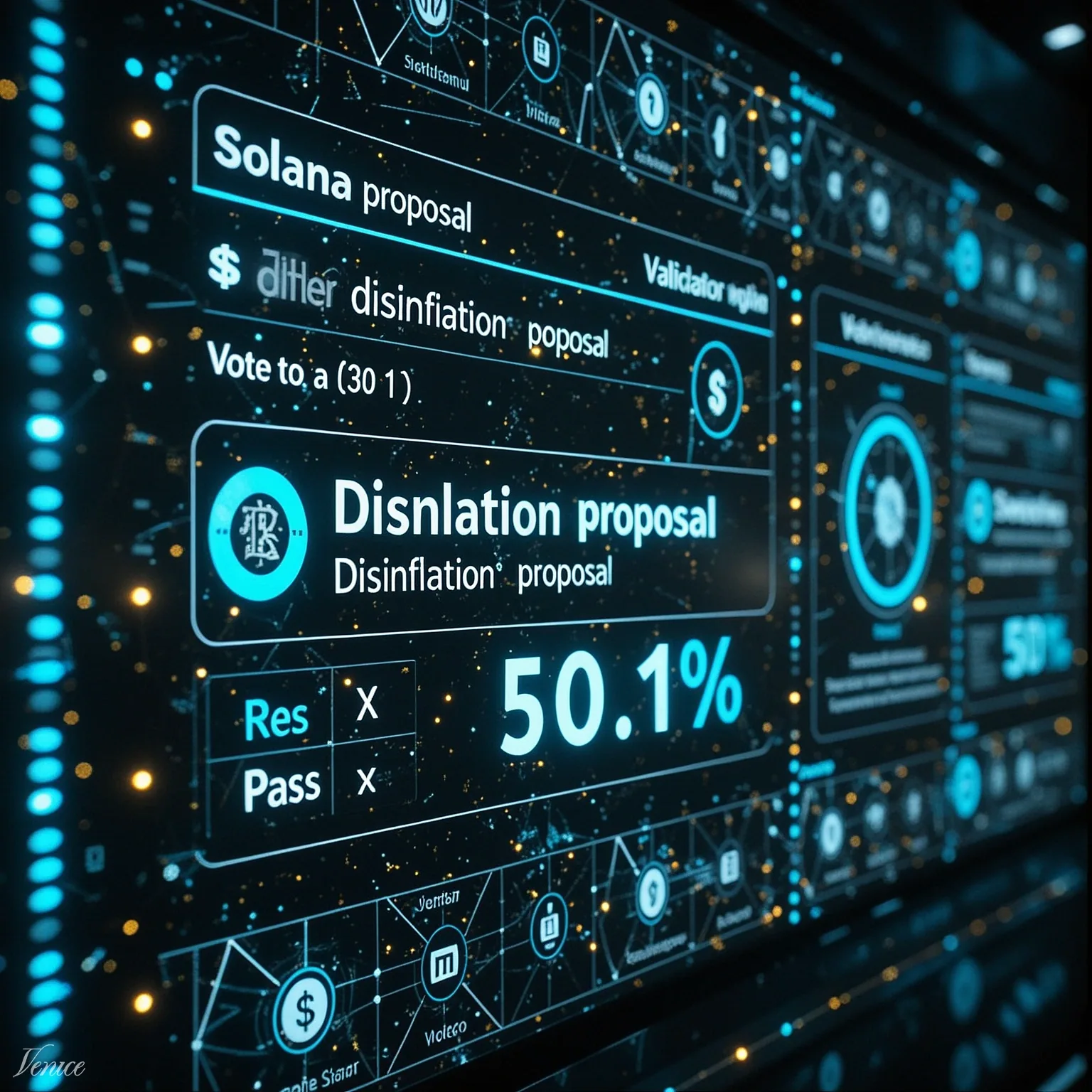
In a dramatic finish, Solana's first network-wide vote to double its disinflation mechanism narrowly passed, with validators from Kraken and Galaxy Digital switching sides at the last minute. The proposal, which reduces SOL's annual inflation rate from 3% to 1.5%, was closely watched by investors and stakeholders as it directly impacts the token's supply and value.
What Happened?
The vote, which took place on August 28, 2026, was a historic moment for Solana as it marked the first time the network's validators were asked to make a decision that would directly affect the token's inflation rate. The proposal aimed to double the current disinflation rate, effectively reducing the annual inflation of SOL from 3% to 1.5%. This change is expected to make SOL a more attractive investment by reducing the supply of new tokens entering the market.
Why the Timing Matters
The timing of the vote was crucial, as it came amidst growing concerns about inflation and tokenomics in the crypto space. With the broader market showing signs of recovery, the reduction in inflation could help SOL maintain its value and attract more investors. The switch in votes by Kraken and Galaxy Digital validators was a significant factor in the proposal's passage, highlighting the influence of major stakeholders in the network.
What It Means for SOL Holders
For SOL holders, the passage of this proposal is a positive development. A lower inflation rate means that the supply of SOL will grow at a slower pace, which could potentially increase the token's value over time. However, it's important to note that the impact of this change will not be immediate and will depend on various market factors. Investors should keep an eye on the network's adoption and usage metrics, as these will play a crucial role in determining the long-term effects of the disinflation measure.
What to Watch Next
Moving forward, the crypto community will be watching to see how the reduced inflation rate affects SOL's price and adoption. The next few months will be critical in determining the success of this proposal. Additionally, the involvement of major validators like Kraken and Galaxy Digital in the voting process highlights the importance of stakeholder engagement in network governance. As Solana continues to evolve, similar votes on network parameters and tokenomics are likely to become more common, shaping the future of the ecosystem.
Frequently asked questions
What is disinflation in the context of Solana?
Disinflation in Solana refers to the reduction of the inflation rate of the SOL token. This means fewer new SOL tokens are created over time, which can help maintain or increase the token's value.
How does the disinflation proposal affect SOL holders?
The disinflation proposal reduces the supply of new SOL tokens, which could potentially increase the token's value over time. However, the actual impact will depend on market conditions and network adoption.
Who are the validators and why are they important?
Validators are entities that secure the Solana network by processing transactions and maintaining the blockchain. They play a crucial role in network governance, as they vote on proposals that affect the network's parameters and tokenomics.
This story feeds our catalyst tracking:
Live on-chain data from our sister sites: