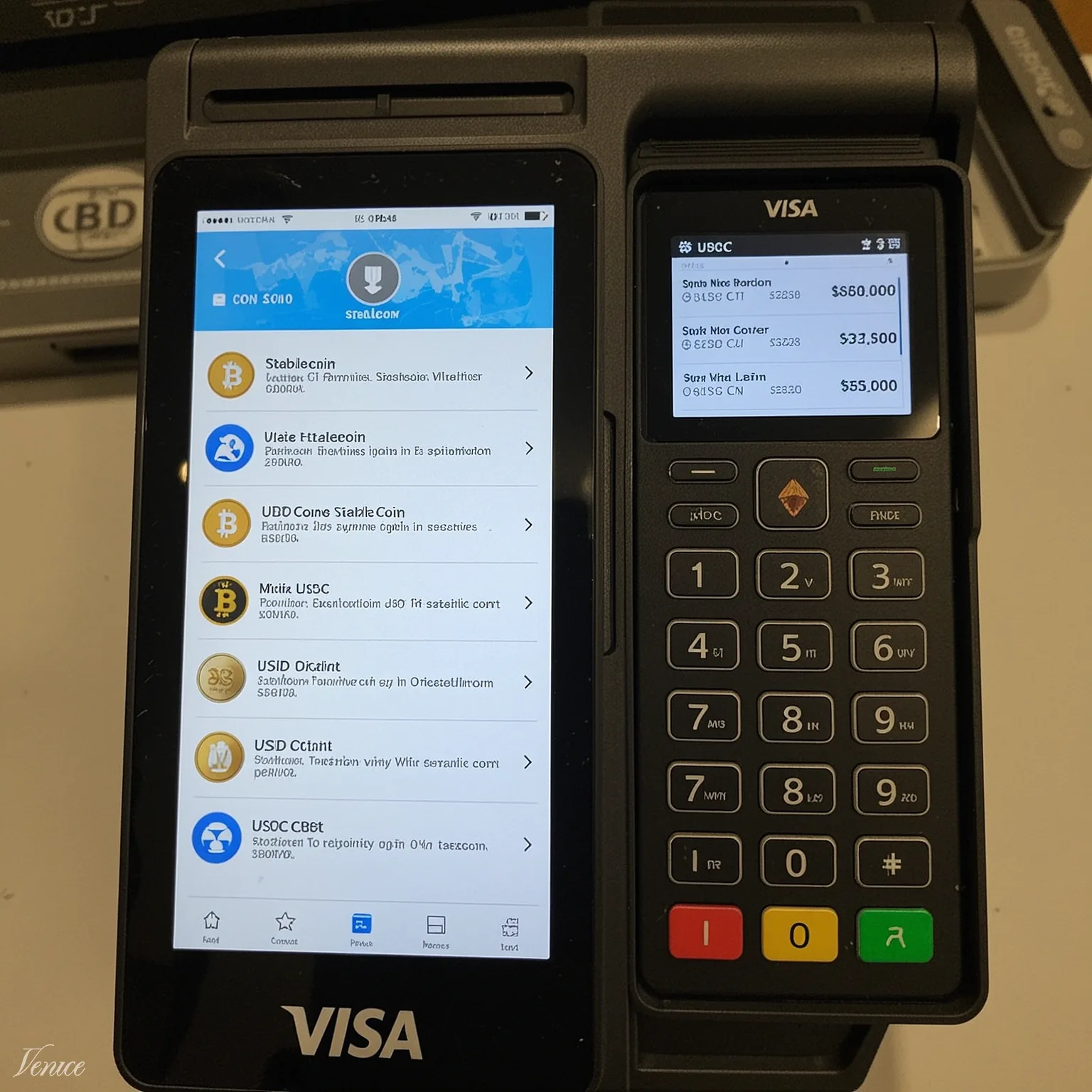
Visa Unveils Stablecoin Platform for Banks and Fintech Companies
Visa has introduced the Visa Stablecoin Platform, a new service that lets financial institutions integrate stablecoin payments and treasury operations into Visa's existing network.
51 stories about Usdc from across the crypto press, curated and summarized daily. Most recent: Oct 17, 2026.

Visa has introduced the Visa Stablecoin Platform, a new service that lets financial institutions integrate stablecoin payments and treasury operations into Visa's existing network.

A consortium-backed stablecoin, Open USD, plans to share reserve income with partners rather than keeping it with the issuer, potentially squeezing Circle's margins if it launches in 2026.

Mizuho downgraded Circle's stock and JPMorgan lowered earnings estimates, citing concerns that USDC is coming under pressure.

JCB, a major Japanese credit card company, has signed a memorandum of understanding (MOU) with Circle to explore using USDC for cross-border treasury operations and merchant payments. This move signals growing interest in regulated stablecoin adoption in Japan.

JPMorgan warns that Hyperliquid's partnership with Circle and Coinbase creates a "prisoner's dilemma" that puts pressure on earnings from the dollar-pegged stablecoin USDC, potentially affecting its stability and reliability for users.

Japan’s largest card network, JCB, has signed a memorandum of understanding with Circle to explore using USDC for cross-border payments and merchant transactions. The partnership could bring stablecoin payments to 40 million merchants as Japan ramps up efforts to integrate stablecoins into everyday commerce.

Circle won final OCC approval to establish a national trust bank, allowing it to place USDC reserves under federal oversight and expanding its regulated digital asset custody business.

Circle, the issuer of the USDC stablecoin, has received final approval from the OCC to open a national trust bank. The bank will initially focus on custody and other trust services, with USDC reserve management planned for a later phase.

Circle secured final OCC approval to establish a national trust bank, shifting its $73.2 billion stablecoin to a unified federal framework.

Circle, the issuer of USDC, has been granted final approval for a national trust bank charter by the OCC. This charter will initially serve Circle and its affiliates, with potential future expansion into institutional custody services.

Circle, the issuer of the stablecoin USDC, has received approval to operate as a trust bank in the U.S., adding to a growing list of crypto firms seeking federal banking licenses as the industry moves into the regulated financial system.

Circle's USDC stablecoin has overtaken Tether in trading volume, driven by a 63% spike in activity as Wall Street banks adopt digital currencies for faster settlements. This shift highlights the growing preference for regulated stablecoins in financial transactions.

Standard Chartered is the first Global Systemically Important Bank authorized to let institutions mint and redeem Circle's USDC stablecoin directly, marking a major step in bridging traditional finance with digital assets.

Circle's CEO emphasized USDC's robust network as a new stablecoin, OUSD, emerges as a potential challenger. Questions remain about OUSD's governance and revenue-sharing models.

Circle, the company behind the USDC stablecoin, has cratered 17% as major companies like Stripe, Coinbase, and BlackRock back a rival stablecoin network. Open Standard's Open USD aims to let partners keep reserve income and eliminate minting fees, challenging Circle's USDC.

Meta is now paying some creators using USDC, a stablecoin pegged to the US dollar. While this validates stablecoins as a mainstream payment method, it also highlights the difficulty of converting them into local currency for everyday use.
Travala’s new protocol lets AI agents search and book hotels with USDC on Base, but travelers still approve the final payment.
Coinbase is partnering with Better Home & Finance to let qualified borrowers use Bitcoin and USDC as collateral for home loan down payments. This initiative could make homeownership more accessible to crypto holders.
Mastercard now supports settlement in USDC, PYUSD, RLUSD, and other stablecoins across multiple blockchains. This move simplifies global payments by reducing reliance on traditional banking systems.

Hyperliquid's new revenue-sharing deal with USDC could move $160 million in revenue from Coinbase and Circle. This could boost Hyperliquid's HYPE token and put pressure on competitors' margins, according to analysts.

Circle, the company behind USDC, has introduced Arc, a new blockchain designed to streamline stablecoin transactions. This could make stablecoin payments faster and more efficient for everyday users.

Solayer has introduced a Visa-compatible card that allows users to spend USDC balances for online, in-store, and contactless transactions. The card also enables ATM withdrawals in supported regions, making stablecoin spending more accessible.

Upshift has introduced a new vault platform that offers instant liquidity for real-world asset (RWA) holders using USDC. Liquidity providers (LPs) can earn redemption fees through this service. The platform aims to bridge the gap between RWA redemptions and liquidity, making the process more efficient for users.

Coinbase will manage USDC liquidity on Hyperliquid, a fast-growing crypto trading platform. This move comes as DeFi trading volumes continue to rise, highlighting the growing demand for stablecoin liquidity.