Democrats Push Back on GOP Crypto Bill Over Ethics Concerns
The latest Clarity Act draft is drawing praise from the crypto industry and criticism from Democrats and bankers, highlighting deep divisions over crypto regulation in the U.S.
47 stories about Clarity Act from across the crypto press, curated and summarized daily. Most recent: Oct 24, 2026.

The latest Clarity Act draft is drawing praise from the crypto industry and criticism from Democrats and bankers, highlighting deep divisions over crypto regulation in the U.S.

After months of deliberations, Republicans released the latest text for broader cryptocurrency legislation, including software developer protections and an ethics provision set to expire in 2029.

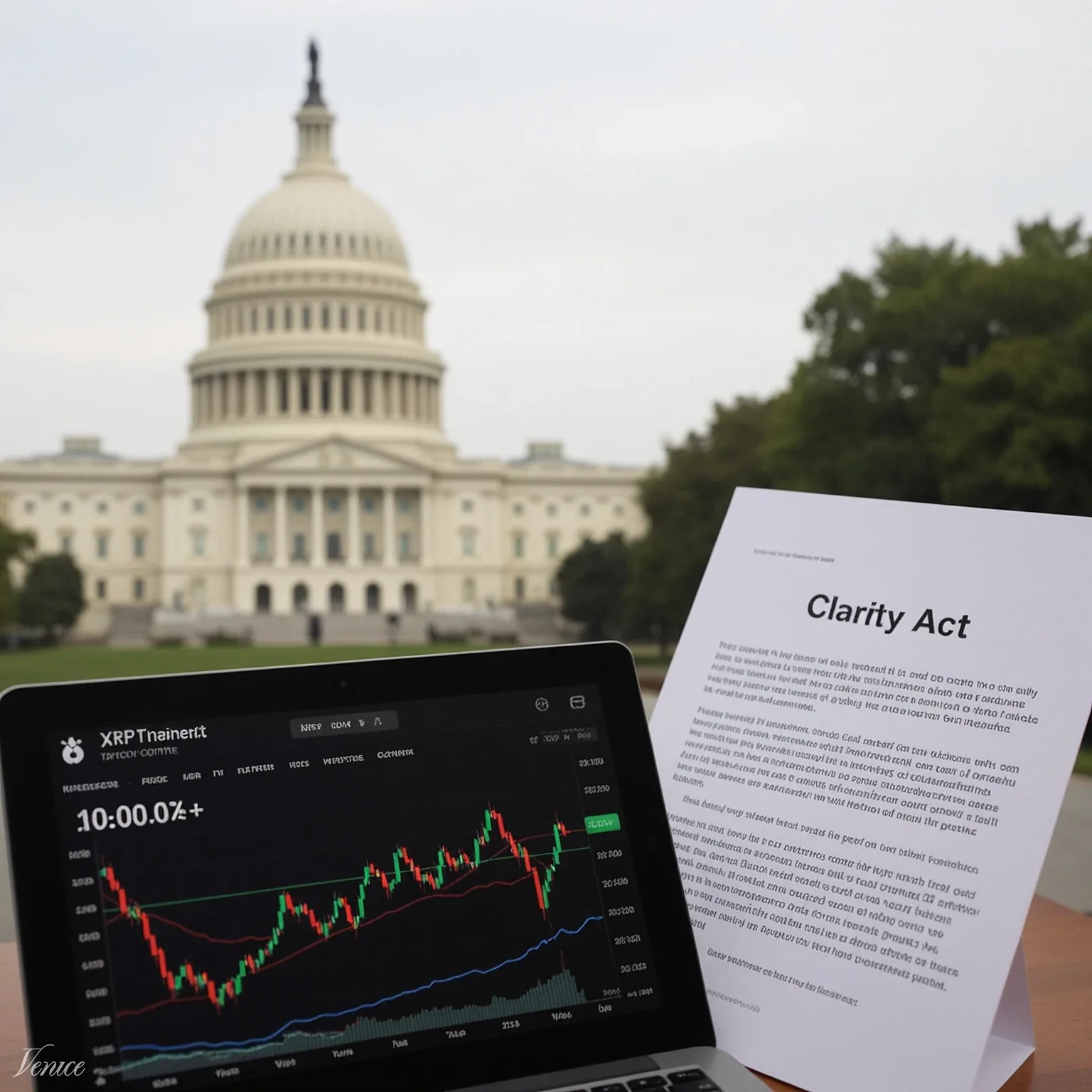
XRP had its best day in weeks, rising on hopes that the U.S. Clarity Act will provide regulatory clarity. However, technical indicators suggest caution is still warranted for investors.

Polymarket bettors have cut the odds of the CLARITY Act passing this year to a record low as Senate negotiations over ethics provisions remain unresolved.

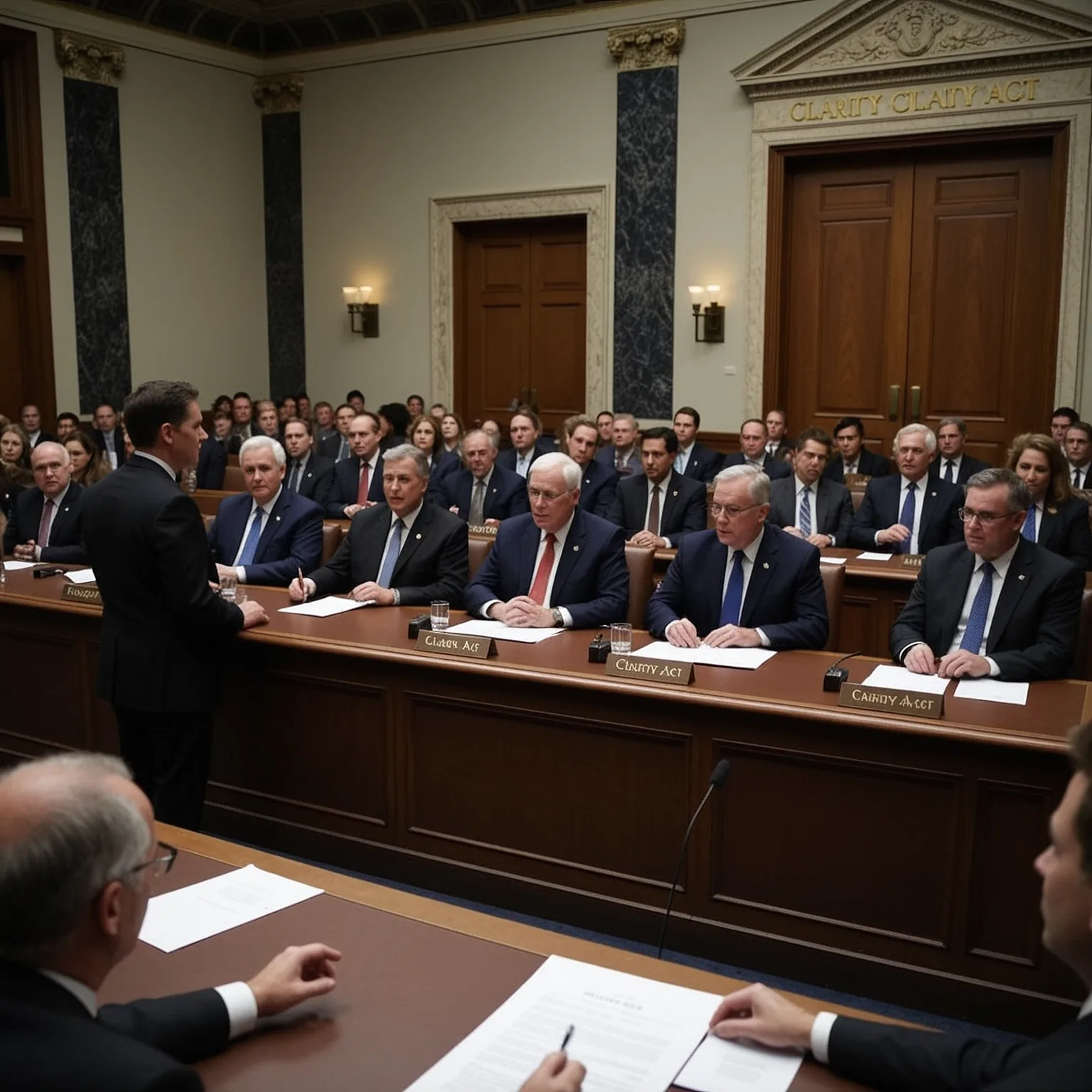
Some U.S. Senate Democrats are publicly opposing the Clarity Act, a crypto market structure bill, calling it 'corrupt' and arguing it benefits special interests. The bill needs significant Democratic support to pass.

Five Democratic senators are calling for hearings to investigate President Trump’s crypto policies, citing concerns over potential foreign influence from UAE-linked entities. The move comes as discussions around the CLARITY Act, a major crypto regulation bill, intensify.

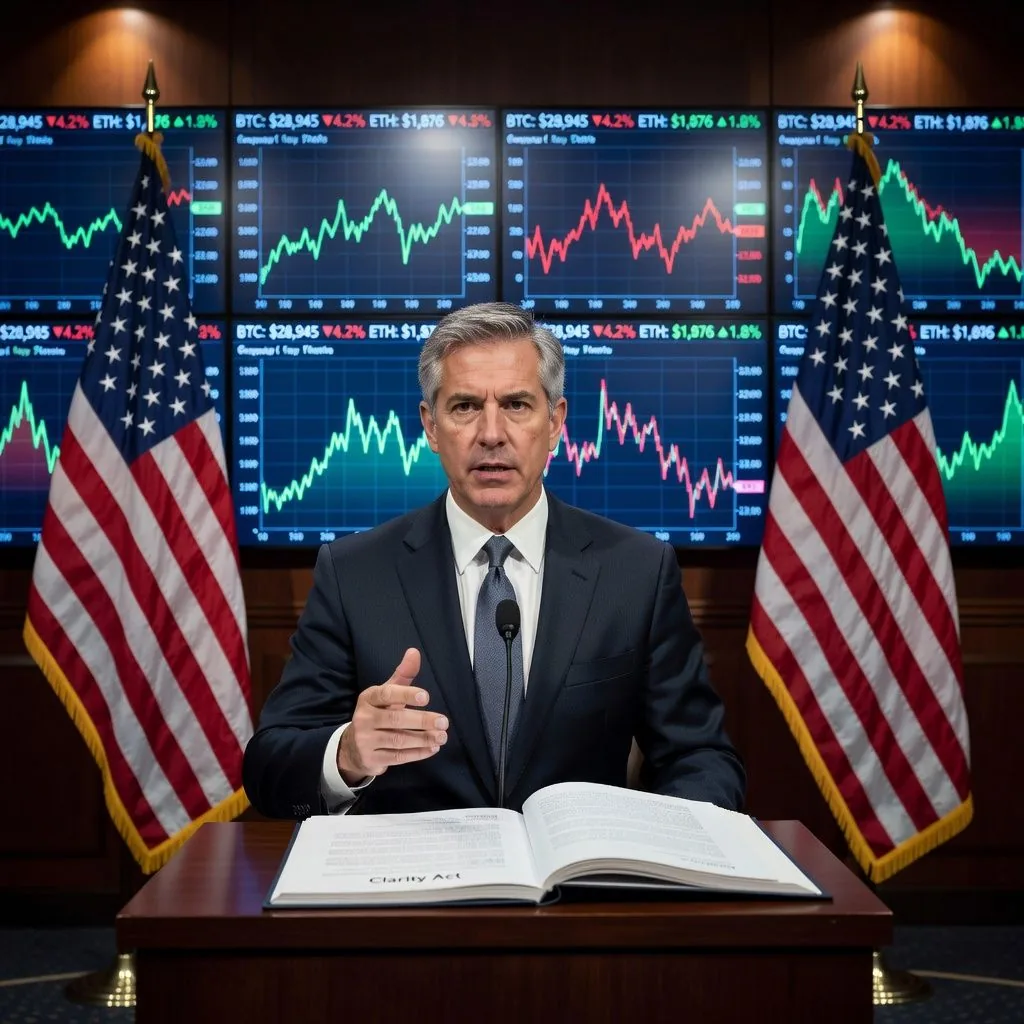
CFTC Chair Michael Selig warned that regulators may end up writing all the rules for crypto if Congress fails to pass the Clarity Act, potentially leading to a patchwork of inconsistent regulations across different agencies.

The Clarity Act enters a critical two-week stretch as Senate negotiators race to resolve disputes over Trump ethics provisions, law enforcement concerns, and market structure rules before a narrow pre-August recess window for a floor vote.

Galaxy Research now sees a 50-50 chance of the CLARITY Act passing the Senate, citing dwindling time before Congress's August recess and mounting legislative uncertainty.

The Clarity Act, a key crypto regulatory bill, faces tough negotiations in the U.S. Senate. Lobbyists are pushing for a July vote, but its future remains uncertain.

The CLARITY Act, formally the Digital Asset Market Clarity Act, is a proposed U.S. cryptocurrency market structure bill that would establish a federal framework for how digital assets are issued, traded and regulated in the United States. The bill focuses on digital asset regulation, including how crypto firms should comply with federal law and which regulators should oversee the market. The bill is still in the proposal stage, with no immediate action required from the public.

The Commodity Futures Trading Commission (CFTC) has hired a former SEC crypto task force adviser known for blockchain forensics. This move comes as Congress considers the CLARITY Act to redefine regulators' roles in digital assets. The new hire, Ian Darrow, brings deep experience in tracking illicit crypto transactions and enforcing compliance. The CFTC's decision highlights the growing importance of blockchain forensics in regulating the crypto space. The CLARITY Act, if passed, could significantly reshape how federal agencies oversee digital assets, potentially leading to clearer guidelines and more coordinated enforcement efforts.
The US Treasury Department is moving forward with President Trump's 2025 executive order to establish a strategic Bitcoin reserve and digital asset stockpile. This could significantly impact Bitcoin's role in global finance and the US economy.

JPMorgan Chase CEO Jamie Dimon, in a Fox Business interview on Friday, called the Clarity Act 'dead on arrival' and accused Coinbase CEO Brian Armstrong of driving the legislation, calling him 'full of sh*t.' Dimon argues the crypto market structure bill threatens the traditional financial system.

JPMorgan CEO Jamie Dimon criticized Coinbase CEO Brian Armstrong and warned the current CLARITY Act framework could ultimately fail, as banks and crypto firms clash over whether stablecoin issuers should be allowed to offer yield-bearing rewards that resemble bank deposits.

The Clarity Act's restrictions on yield-bearing crypto products could push the industry toward AI-driven, compliant yield infrastructure. This shift may create new opportunities for 'yield-as-a-service' models, moving away from passive 'hold-to-earn' strategies.

The Clarity Act, a major crypto market structure bill, secured bipartisan support with a last-minute deal, but critics worry it may negatively impact decentralized finance (DeFi). The changes were made to win over Democrats, but the long-term effects on DeFi are still unclear.

The Clarity Act, a bill aimed at providing regulatory clarity for the crypto industry, moved forward during a contentious markup hearing. The hearing highlighted significant disagreements but also marked progress for the legislation.

XRP prices jumped 5% after a key Senate committee advanced the Clarity Act, which could bring legal clarity for crypto. However, a real institutional boom will require full congressional approval and broader market confidence.

Bitcoin's price jumped 3% to surpass $82,000 as the Senate advanced the Clarity Act. STRC's Bitcoin trading volume hit $1 billion in a single day, fueling a boom in Bitcoin-backed credit.

The Senate Banking Committee is debating amendments to the Clarity Act, a bill aimed at establishing a regulatory framework for cryptocurrencies. The vote could shape the future of crypto markets in the U.S. by providing clear guidelines for digital asset trading and custody.

A new draft bill could exempt Bitcoin and Ethereum from securities laws, potentially clarifying their legal status. This move aims to provide regulatory certainty for crypto investors and businesses.

The banking industry has expressed concerns that the Clarity Act's stablecoin proposal could enable regulatory evasion. This highlights ongoing tensions in crypto legislation. In plain English, banks worry the rules are too loose. The issue has been debated for months, with no clear resolution yet.