Michael Saylor Urges US Lawmakers to Embrace Digital Assets and AI Capital Formation
MicroStrategy Executive Chairman Michael Saylor argued that autonomous AI agents will inevitably turn to friction-free, digital native capital like Bitcoin, calling on U.S. policymakers to establish progressive regulations to maintain economic preeminence.
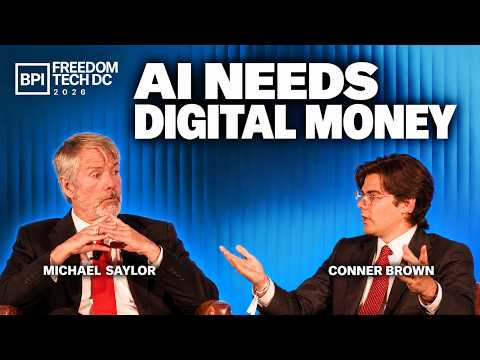
In a discussion on the future of financial rails and artificial intelligence, MicroStrategy Executive Chairman Michael Saylor outlined the need for the United States to modernize its digital asset framework. Saylor emphasized that current financial infrastructure remains bogged down by antiquated rules, restricting millions of small and mid-sized American businesses from raising capital efficiently. To unlock full economic potential and support job creation in an AI-driven economy, he urged federal regulators to establish clear rights for digital token issuance, yield-bearing stablecoins, tokenized securities with self-custody capabilities, and digital commodities like Bitcoin.
A central pillar of Saylor's policy recommendations involves integrating Bitcoin directly into the traditional banking and insurance sectors. He criticized restrictive accounting guidelines, such as the Basel 1250% risk weighting, which deter major institutions from holding Bitcoin on their balance sheets. Saylor noted that if top American banks like JPMorgan and Morgan Stanley were encouraged to custody Bitcoin and extend credit against it, institutional liquidity could absorb annual supply and push the broader digital asset industry toward a $10 trillion market valuation. He pointed to key regulatory figures at the Treasury, SEC, CFTC, and the White House as critical to enabling this transition over the coming two years.
Turning to the rapid expansion of digital intelligence, Saylor explained that autonomous AI agents operating around the clock will inherently reject 20th-century banking hours, manual friction, and traditional KYC constraints. Because AI entities cannot obtain bank accounts, credit cards, or physical deeds, they will naturally default to borderless, instant settlement layers like Bitcoin. Addressing concerns regarding autonomous software running unchecked, Saylor advised Washington against enacting prohibitions, asserting that the best defense against technological threats is ensuring the United States maintains absolute leadership in both AI capabilities and digital capital.