$ROUTER's Privacy Architecture for AI Agents: Encrypted Prompts and Intel TDX Enclaves
$ROUTER is building a privacy-focused architecture for AI agents that encrypts prompts on the client side and processes them through Intel TDX enclaves. This approach aims to enhance data security and privacy in AI interactions.
Key takeaways
- $ROUTER encrypts AI agent prompts client-side for enhanced privacy.
- The architecture routes prompts through Intel TDX enclaves for secure processing.
- Open-weight models are used to ensure transparent and verifiable processing.
- This approach aims to set a new standard for privacy in AI interactions.
- Intel TDX enclaves provide hardware-based isolation for sensitive data.
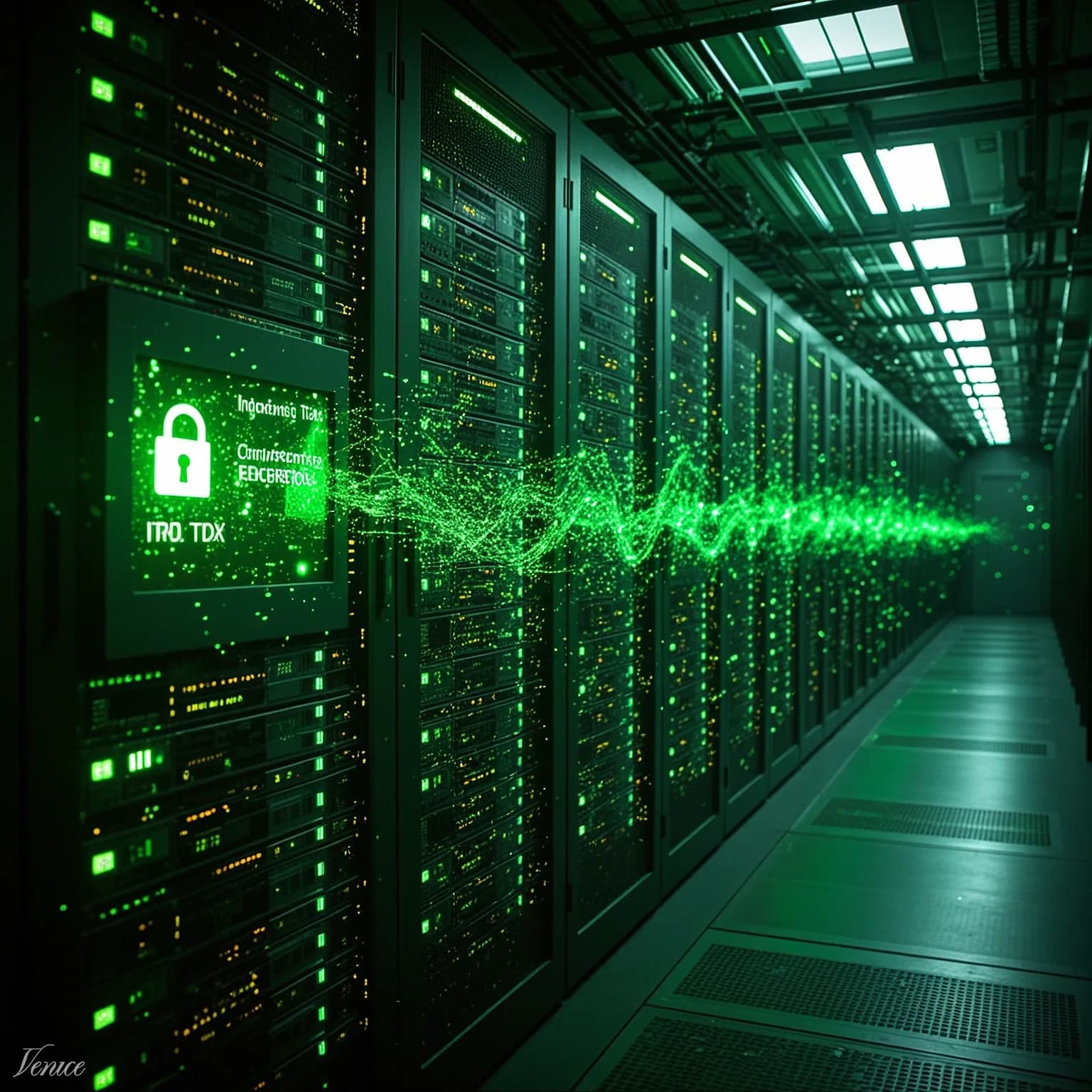
$ROUTER, a project focused on privacy for AI agents, has unveiled an architecture that encrypts prompts client-side and routes them through Intel TDX enclaves. This system uses open-weight models to process the encrypted data, ensuring that sensitive information remains secure throughout the AI interaction process.
## How Does $ROUTER Ensure Privacy? $ROUTER's architecture encrypts user prompts on the client side before they are sent to the AI agent. These encrypted prompts are then routed through an attested Intel TDX enclave, which provides a secure environment for processing the data. The use of open-weight models ensures that the processing is transparent and verifiable, adding an additional layer of security.
## Why Use Intel TDX Enclaves? Intel TDX (Trust Domain Extensions) enclaves provide hardware-based isolation for sensitive workloads. By routing encrypted prompts through these enclaves, $ROUTER ensures that the data is processed in a secure and isolated environment, protecting it from potential breaches or unauthorized access. This hardware-level security is crucial for maintaining the privacy of user data in AI interactions.
## What This Means for AI Privacy The $ROUTER architecture represents a significant step forward in AI privacy. By encrypting prompts and processing them in secure enclaves, $ROUTER aims to address the growing concerns around data privacy in AI systems. This approach could set a new standard for privacy-focused AI agents, making it easier for users to trust that their data is secure.
For more on AI and privacy, check out our coverage on how AI is helping discover tech vulnerabilities.
Frequently asked questions
What is $ROUTER?
$ROUTER is a project focused on building a privacy layer for AI agents, encrypting prompts client-side and processing them through secure Intel TDX enclaves.
How does $ROUTER ensure the privacy of AI interactions?
$ROUTER encrypts user prompts on the client side and routes them through Intel TDX enclaves, which provide a secure environment for processing the data.
What are Intel TDX enclaves?
Intel TDX (Trust Domain Extensions) enclaves are hardware-based isolation environments that provide secure processing for sensitive workloads.
Why is the use of open-weight models important in $ROUTER's architecture?
Open-weight models ensure that the processing of encrypted data is transparent and verifiable, adding an additional layer of security and trust.