Clarity Act Fails Senate Vote: Crypto Industry Reacts to Regulatory Setback
The U.S. Senate failed to pass the Clarity Act, a key bill aimed at regulating crypto markets. Bitcoin prices briefly dropped but recovered. The industry now faces continued uncertainty.
Key takeaways
- The U.S. Senate failed to pass the Clarity Act, a key bill aimed at regulating crypto markets.
- Bitcoin prices briefly dipped but stabilized after the bill's failure.
- The failure of the Clarity Act leaves the crypto industry in regulatory limbo.
- The crypto industry will continue to operate under existing regulations, which are often enforced in conflicting ways.
- Investors should stay informed about any developments in crypto regulation and market trends.
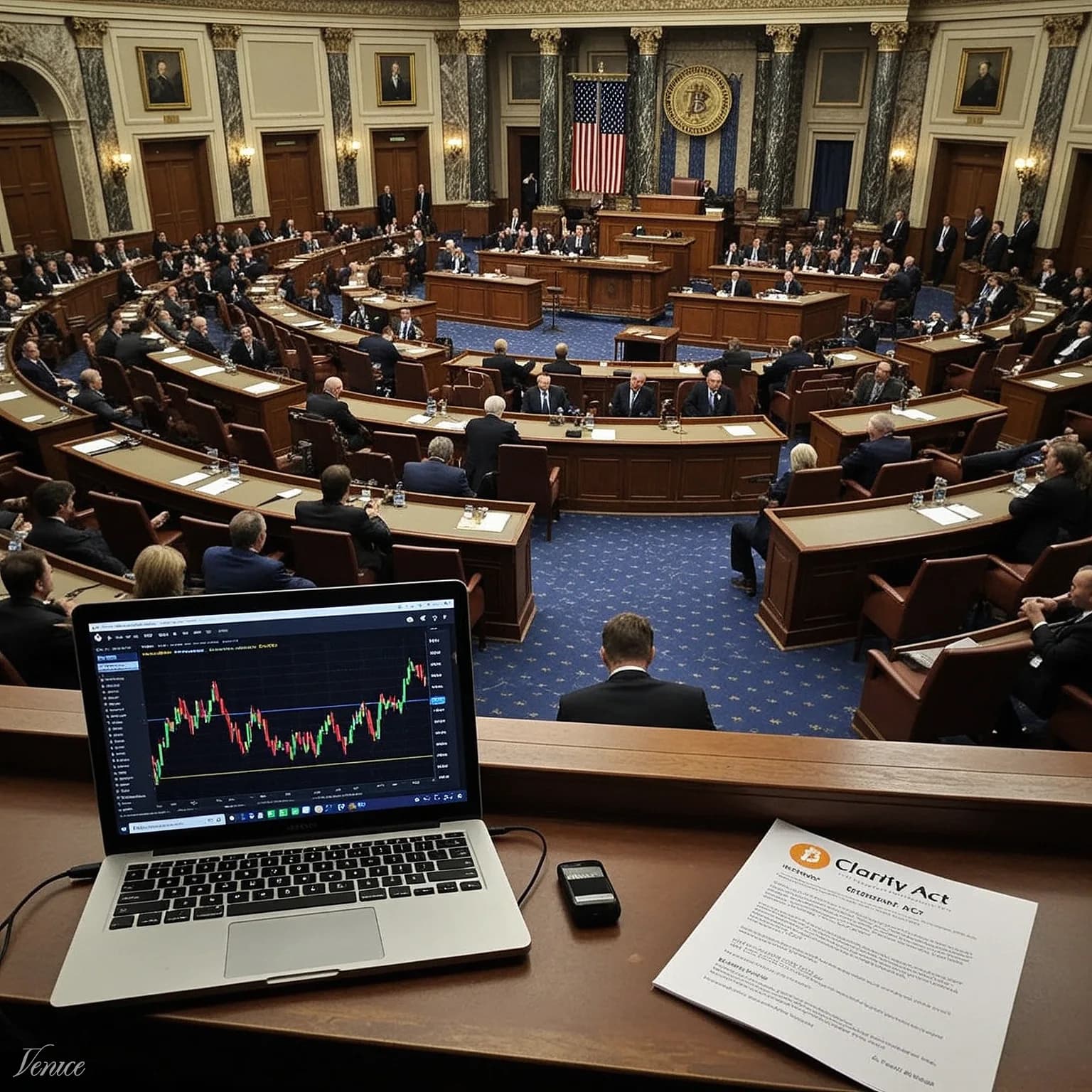
The Clarity Act Fails to Advance
The U.S. Senate fell short of the 60 votes needed to advance the Clarity Act, a landmark bill designed to provide regulatory clarity for the crypto industry. The bill, which aimed to establish clear guidelines for digital asset markets, failed to secure enough bipartisan support despite intense lobbying efforts from both crypto and banking sectors. Bitcoin prices briefly dipped as the no tally mounted but stopped well short of panic, according to Decrypt.
The Clarity Act had undergone several revisions ahead of the vote, including tweaks to provisions related to decentralized finance (DeFi) and credit unions. However, these changes were not enough to sway enough senators. The bill's failure leaves the crypto industry in a state of regulatory uncertainty, with no clear path forward for comprehensive federal regulation.
Why the Timing Matters
The timing of the Clarity Act's failure is significant. The crypto industry has been pushing for regulatory clarity amid a backdrop of increasing scrutiny from federal agencies. The Securities and Exchange Commission (SEC) and the Commodity Futures Trading Commission (CFTC) have been actively enforcing existing regulations, often in conflicting ways. The Clarity Act was seen as a way to harmonize these efforts and provide a clear framework for crypto businesses to operate within.
The failure of the bill also comes at a time when the crypto market is experiencing increased volatility. Bitcoin and other major cryptocurrencies have seen significant price swings in recent months, partly due to regulatory uncertainty. The lack of clear regulations could continue to contribute to market instability, making it harder for investors to make informed decisions.
What It Means for the Crypto Industry
The failure of the Clarity Act is a setback for the crypto industry, which has been advocating for regulatory clarity for years. Without a clear regulatory framework, crypto businesses may continue to face legal and operational challenges. This could stifle innovation and investment in the sector, as companies may be reluctant to enter a market with uncertain regulatory conditions.
For individual investors, the lack of regulatory clarity could mean continued volatility and uncertainty. However, it's important to note that the failure of the Clarity Act does not mean the end of regulatory efforts. The industry and lawmakers are likely to continue pushing for comprehensive crypto regulations, albeit through different avenues. Investors should stay informed about any developments in this area and consider the potential impact on their portfolios.
What's Next for Crypto Regulation
The failure of the Clarity Act does not necessarily mean the end of regulatory efforts for the crypto industry. Lawmakers and industry groups are likely to continue pushing for comprehensive regulations, albeit through different avenues. The industry may also see increased lobbying efforts to push for more favorable regulations in the future.
In the meantime, the crypto industry will continue to operate under existing regulations, which are often enforced in conflicting ways by different agencies. This could lead to continued legal and operational challenges for crypto businesses. However, it's important to note that the industry has shown resilience in the face of regulatory uncertainty, and many companies have found ways to navigate the current landscape.
For investors, the failure of the Clarity Act means continued uncertainty in the crypto market. However, it's important to remember that the market has weathered similar challenges in the past. Staying informed about regulatory developments and market trends can help investors make more informed decisions.
Banking Groups Push for Stricter Stablecoin Limits
Eight trade associations, including banking groups, used the Clarity Act vote as leverage to demand stricter limits on stablecoin provisions, according to Decrypt. They argued that exceptions for interest-like rewards on stablecoins could pull deposits from banks and reduce lending capacity. This push for tighter rules added another layer of complexity to the already contentious debate, though the bill ultimately failed before those demands could be addressed.
Frequently asked questions
What was the Clarity Act?
The Clarity Act was a proposed U.S. bill aimed at providing regulatory clarity for the crypto industry, establishing clear guidelines for digital asset markets.
Why did the Clarity Act fail?
The Clarity Act failed to secure the 60 votes needed to advance in the Senate, despite intense lobbying efforts from both crypto and banking sectors.
How did Bitcoin react to the Clarity Act's failure?
Bitcoin prices briefly dipped as the no tally mounted but stopped well short of panic, according to Decrypt.
What does the failure of the Clarity Act mean for the crypto industry?
The failure of the Clarity Act leaves the crypto industry in a state of regulatory uncertainty, with no clear path forward for comprehensive federal regulation.