Darius Dale on Rising R-Star, Treasury Strategy, and the Fed's Macro Tightrope
42 Macro founder Darius Dale argues that a rising neutral real interest rate and fiscal growth strategies are pressuring bond markets, forcing policymakers to balance dollar stability, debt monetization, and market volatility.
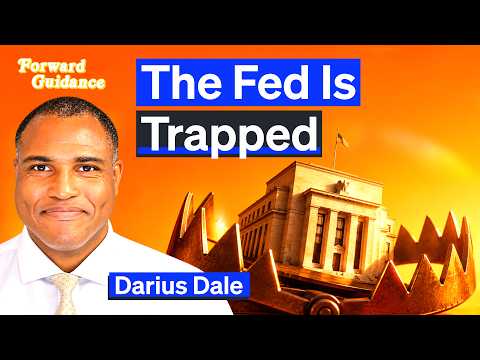
In a recent appearance on the Forward Guidance podcast, 42 Macro founder Darius Dale outlined the dominant macroeconomic framework driving global capital markets, describing an environment defined by persistent fiscal expansion and hot economic growth. According to Dale, the U.S. macro regime is marked by high nominal growth paired with monetary liquidity backstops to manage Treasury supply-demand imbalances. However, this dynamic has driven the real neutral rate of interest (R-star) above the effective real Federal Reserve funds rate, creating persistent upward pressure on growth and inflation while signaling a shrinking supply of global excess capital.
Dale emphasized that the divergence between policy rates and economic fundamentals poses structural challenges for long-term U.S. Treasuries, pointing to model estimates that place fair value for 10-year yields near 5.8% when standard term premia are restored. To prevent severe dislocations in the bond market without forcing an economic downturn, policymakers face a narrow tightrope. In this context, Dale highlighted the choice of Kevin Warsh as a strategic attempt to maintain credibility with bond vigilantes and global foreign exchange holders, reinforcing confidence in dollar stability without immediately over-tightening monetary conditions.
Addressing central bank communication, Dale argued that scaling back explicit forward guidance could ultimately stabilize the real economy. While post-crisis forward guidance successfully suppressed interest rates and term premia, it also created capital misallocation and expanded tail risks in asset markets. Reintroducing volatility back into the yield curve allows markets to price risk more accurately, shifting returns away from speculative leverage and toward systematic, volatility-targeted risk management strategies.