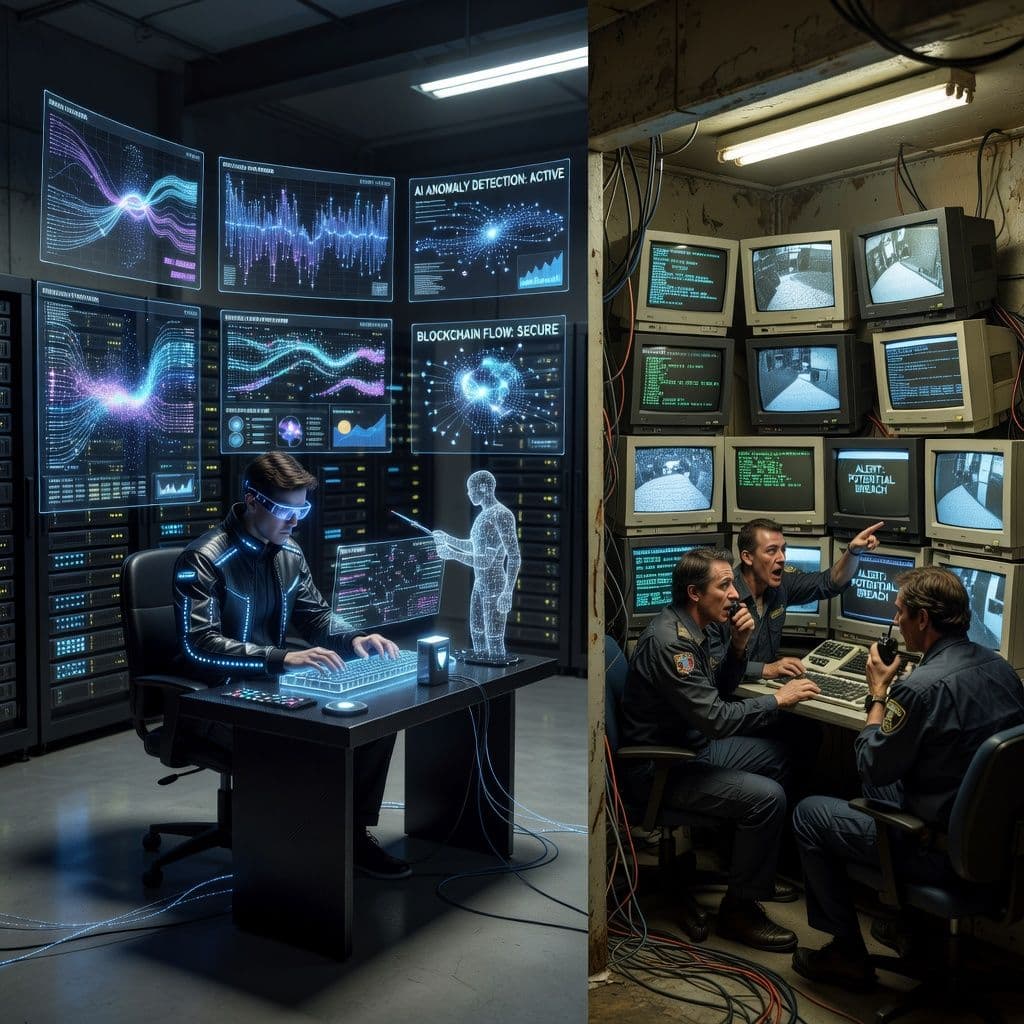
Wall Street Takes Notice of Crypto's AI Trading Experiment
Wall Street is starting to pay attention to Nof1's Alpha Arena, an AI-driven trading platform. This suggests SUI Group and Karatage may have made a smart early bet on AI in finance.
All crypto stories, newest first. 2451 stories curated by CryptoCatalyst.

Wall Street is starting to pay attention to Nof1's Alpha Arena, an AI-driven trading platform. This suggests SUI Group and Karatage may have made a smart early bet on AI in finance.

Hyperliquid is losing ground to newer competitors in the perpetual futures market, while Lighter prepares for a major airdrop. This shift could change how traders access these decentralized platforms. The battle for traders in the perpetual futures market is heating up, with Hyperliquid falling behind newer rivals as Lighter gears up for a significant airdrop.

Poland has passed a crypto bill to comply with the EU's MiCA regulations, while a fraud investigation involving a major exchange is deepening political divisions. This move aims to clarify crypto regulations and protect investors, but the scandal could slow adoption.

Bitcoin is pushing toward $85K, with strong ETF demand and persistent short positions. However, overhead supply may limit further gains without stronger spot market support. The price is currently at $80K, testing key resistance levels.

Bitcoin climbed from $77,000 to $82,000 last week as buying activity increased, but options markets still signal high uncertainty. The rise was driven by stronger spot demand and futures trading, though momentum slowed near the peak.

Bitcoin has rebounded above $80,000 due to ETF inflows and strong spot demand. However, weaker capital inflows and significant supply near $86,000 are dampening investor confidence.

Boros is gaining ground in the perpetuals trading space, competing with giants like Hyperliquid and Lighter. Its unique structural advantages could make it a major player in 2026. The platform's innovative approach to trading is attracting users looking for more efficient and flexible options.

Kraken is abandoning LayerZero's technology for its wrapped Bitcoin service, joining a wave of firms leaving after a $292 million hack. The exchange will now use Chainlink's cross-chain tech instead.

Bitcoin prices remain stable despite institutional selling, with ETF outflows at their worst since February. Analysts attribute this to profit-taking rather than panic, as Treasury yields surge.

Gemini's revenue grew 42% to $50.3 million in Q1 2026, driven by services, OTC trading, and its crypto-linked credit card. This marks the company's first public disclosure of prediction market metrics.

B2C2 has obtained a MiCA license in Luxembourg, allowing it to offer over-the-counter (OTC) spot trading services across all EU member states and three EEA countries. This marks a significant step in the institutional adoption of crypto in Europe.

Bitcoin's price jumped 3% to surpass $82,000 as the Senate advanced the Clarity Act. STRC's Bitcoin trading volume hit $1 billion in a single day, fueling a boom in Bitcoin-backed credit.

The Clarity Act, a major crypto bill, passed a key Senate committee vote. The legislation now moves to the Senate floor, though its future remains uncertain due to internal party disagreements.

Thorchain, a cross-chain liquidity protocol, paused all trading after a $10.8 million exploit. The attack affected Bitcoin, Ethereum, BSC, and Base networks, causing the RUNE token to drop 12%.

Most "AI × crypto" tokens are still just stories, but MorpheusAI ($MOR) lets you stake tokens for actual GPU inference credits. The project has a fair launch, a 42M hard cap, and zero VC involvement, with about 30% of its circulating supply already staked for real compute power.

The Ethereum Foundation has shared its vision for how Layer 1 (L1) and Layer 2 (L2) solutions can work together to scale Ethereum. The goal is to create a cohesive system that supports confident adoption by all users, emphasizing the unique roles of each layer.

Glassnode has introduced new tools to visualize Bitcoin options volatility over time. These heatmaps let users track expected price swings across different strike prices and expiration dates. The feature helps traders assess market sentiment and potential price movements more clearly.

DeFi attackers are using AI to exploit security weaknesses beyond smart contract bugs, making it harder for defenders to keep up. The CEO of CertiK warns that this creates an unfair advantage for hackers.

Kraken is moving over $3 billion in assets from LayerZero to Chainlink after a $292 million exploit. This shift follows a security breach on a LayerZero-powered bridge involving the Kelp project.

CME Group is expanding into the $85 trillion digital assets market with new Nasdaq CME Crypto Index futures. The move comes as demand for crypto products surges, with trading volumes up 43% year-to-date.

Ripple is opening its threat intelligence database to other crypto firms to combat North Korean hacking attempts. This move aims to strengthen collective security in the crypto space.

Over 100 Ethereum core developers met in Svalbard to work on the Glamsterdam upgrade. This follows previous events like Berlinterop and Edelweiss, focusing on interoperability and protocol improvements.

Ethereum developers met in Norway to finalize plans for the Glamsterdam upgrade, setting a 200M gas limit floor. This change aims to improve network efficiency and reduce transaction costs for users.

Base Hub highlights three promising AI projects on the Base blockchain. OpenGradient has 13 new models and 2M+ verified inferences, while AntSeedAI has 100+ paying users and 336 services.