
web3
MetaMask debuts Agent Wallet giving AI bots self-custody access to Ethereum
Consensys-backed MetaMask is rolling out a non-custodial wallet for AI agents for general availability this summer.
via The Block#metamask#ai#ethereum
All crypto stories, newest first. 1532 stories curated by CryptoCatalyst.
Consensys-backed MetaMask is rolling out a non-custodial wallet for AI agents for general availability this summer.
CME Group has introduced a new financial product that lets traders bet on bitcoin's price swings, not its actual price. Two firms, Monarq and DV Chain, have already placed the first bets on this volatility index.
Crypto exchange Bybit is offering tokenized shares of U.S. IPOs, starting with SpaceX. This move gives retail investors direct access to IPOs at official prices, cutting out traditional underwriters. Bybit is leveraging blockchain technology to democratize access to high-profile initial public offerings.
MetaMask has introduced a new self-custodial wallet designed for AI agents to trade across DeFi while keeping users in full control of their funds and approvals. This innovation aims to make decentralized finance more accessible and secure.

1. OVERNIGHT MOVES

The Zcash vulnerability uncovered with help from Anthropic's Claude Opus 4.8 signals a shift in who may discover critical flaws first. Experts warn the crypto industry may not be prepared for this new reality.

The Crypto Council for Innovation has launched a coalition to advocate for clearer regulations on crypto vaults, which allow users to deposit digital assets and earn yield. This move aims to address the growing popularity and regulatory uncertainty surrounding these financial products.

HTX will delist the USD1 stablecoin after World Liberty Financial froze HTX-linked addresses over UK sanctions compliance. HTX had previously stated that the stablecoin issuer took the action.
A New York judge has temporarily halted a lawsuit seeking ownership of nearly 40,000 bitcoin wallets. The case hinges on whether New York's lost-and-found statute applies to assets controlled by private keys. The judge will hear arguments on a proposed amicus brief in July.

Bitcoin surged after President Trump's reelection, pushing to new highs deep into 2025. Now it's down more than 50% from that peak, trading below where it was before the rally began.

The price of Zcash cratered following the disclosure of a serious vulnerability for the privacy coin. Can ZEC make a comeback anytime soon?

Abra’s CEO Bill Barhydt believes tokenized yield products and onchain lending will be the next big thing in crypto wealth management. This comes as Abra prepares for its Nasdaq debut, signaling growing institutional interest in the space.

Bitcoin has returned to $60,000, but institutional investors are now selling heavily through ETFs, marking a sharp reversal from February when they were net buyers during the dip. ETF outflows have reached $1.2 billion in the past week, according to CoinDesk.

Yan Liberman argues that judging crypto projects like Venice by traditional value accrual metrics is premature. He highlights Hyperliquid as an example of a project with a strong business model.

A viral tweet by @galactiator dismantles the claim that Big Tech can easily add privacy as a checkbox feature, calling it historically illiterate and pointing out that if it were that simple, companies would have already done it.

Standard Chartered's Geoff Kendrick argues Bitcoin's sharp decline—driven by Strategy's surprise sale, ETF outflows, and liquidations—may be nearing a bottom.

Michael Saylor argued the bitcoin selloff reflects a broader capital rotation into AI infrastructure rather than weakening fundamentals for Bitcoin.
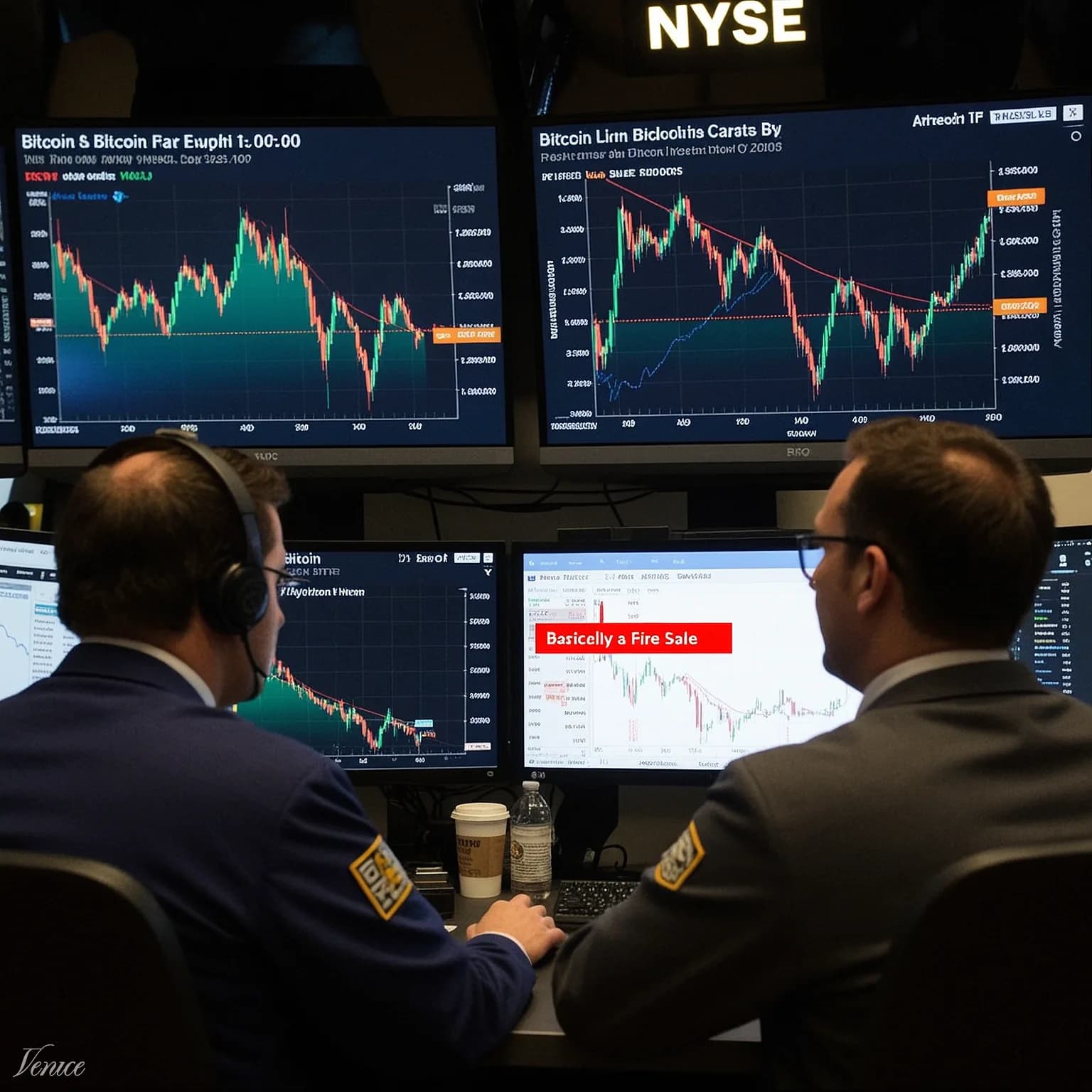
Bitcoin's price has fallen below the 'Basically a Fire Sale!' level on the Bitcoin Rainbow Chart, a rare event that last happened during the FTX collapse. The Fear and Greed Index has also dropped to 12, indicating extreme fear in the market.

Bitcoin's recent price drop is testing the belief that institutions are steadily adopting it. Anthony Pompliano argues this is normal market behavior as Bitcoin matures into a mainstream financial asset.

Shares of Cypherpunk Technologies, the company behind Zcash, fell sharply due to concerns over a privacy bug in the ZEC cryptocurrency. The bug could potentially expose transaction details, raising worries among investors.

Bitcoin dropped to $59,227 overnight but rebounded, following a broader market selloff triggered by strong jobs data. The volatility led to $1.6 billion in liquidations across crypto markets.

Meta is now paying some creators using USDC, a stablecoin pegged to the US dollar. While this validates stablecoins as a mainstream payment method, it also highlights the difficulty of converting them into local currency for everyday use.

A Schwab strategist suggests Bitcoin's recent crash found support near $60,000, where it matches the production cost for the most efficient miners. This could create a natural energy-based floor for the price, as miners are unlikely to sell below their operational costs.

1. OVERNIGHT MOVES